
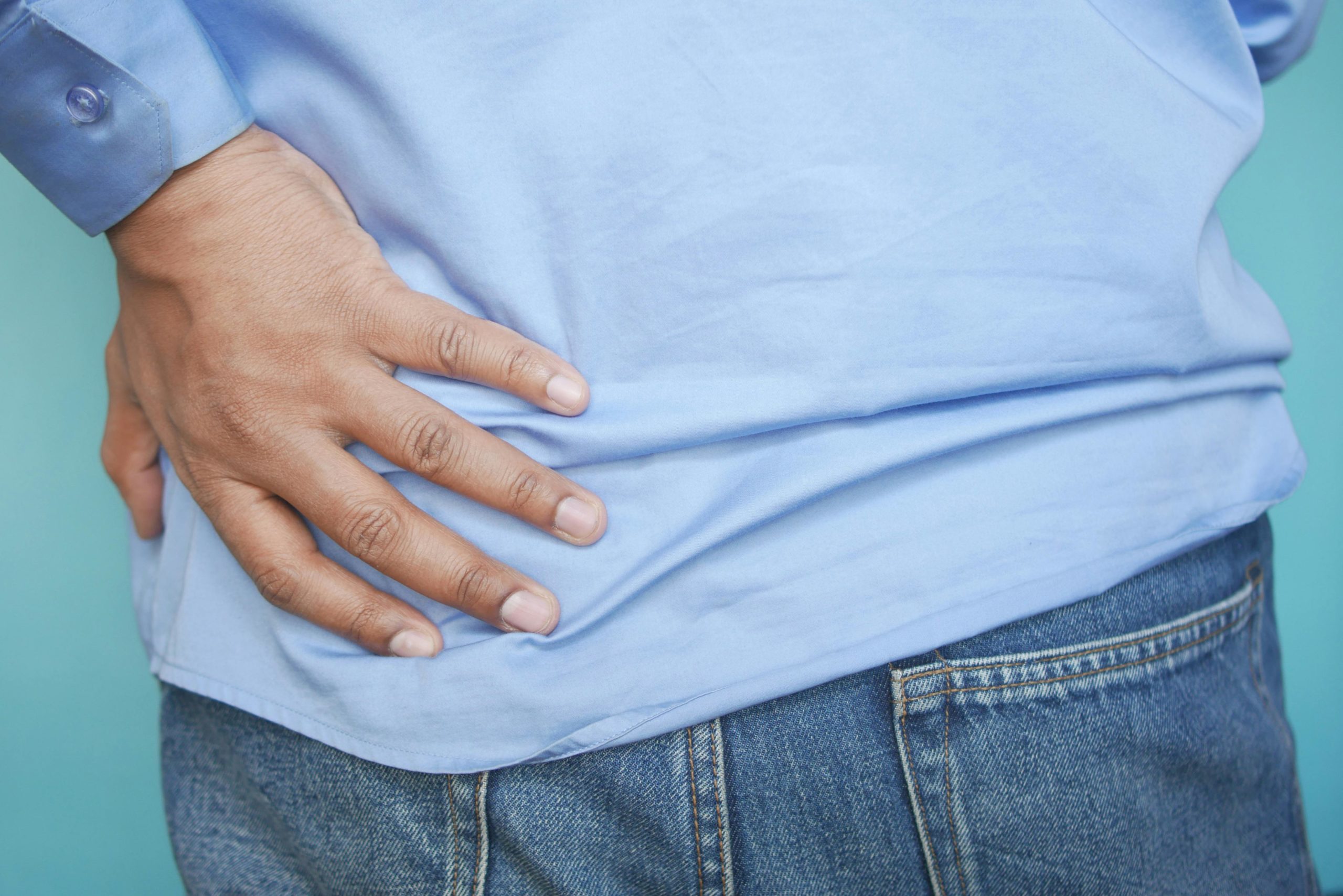
It’s 2 a.m. and you’ve rolled onto your side again. The ache on the outside of your hip wakes you up, so you shuffle onto your back, then your other side, then put a pillow between your knees. In the morning, the first few steps feel stiff. Stairs, getting out of the car, and standing on one leg to put on your pants all remind you it’s there.
If that sounds like your nights, you may be dealing with greater trochanteric pain syndrome, or GTPS. It’s one of the most common reasons people search for hip pain treatment in Ashland, OR, and it’s especially common in women in midlife, though it affects plenty of runners, hikers and cyclists too.
Many people are told it’s “just bursitis,” given a stretch for the IT band, and sent home. When the stretch doesn’t help, or makes it worse, it’s easy to feel like you’re doing something wrong. You’re not. The usual advice simply misses what’s most often going on.
What’s Really Causing Your Outer Hip Pain
The bony point you can feel on the side of your hip is the greater trochanter. Two important hip muscles, the gluteus medius and gluteus minimus, attach there by tendons. Their job is to hold your pelvis level every time you stand on one leg, which means with every step you take.
GTPS is an umbrella term for pain in this area. Older thinking blamed the bursa, a small fluid-filled cushion near the bone. More recent research suggests that in most people, the main issue is the gluteal tendons themselves: a tendinopathy, where the tendon has become sensitive and less able to handle load. Bursa irritation can be part of the picture, but it’s often not the whole story.
Here’s why that matters. Those tendons are sensitive to compression, which happens when the tendon is squeezed against the bone. Compression increases when your thigh crosses toward or past your midline, for example when you:
- Sleep on your side with the top knee dropped toward the bed
- Sit with your legs crossed or in a low, deep chair
- Stand with your weight shifted onto one hip
- Stretch the IT band by pulling your leg across your body
That last one is the surprise for a lot of people: a commonly recommended stretch can increase the very compression that irritates the tendon. Changes in hormones in midlife, a period of less activity, or a sudden increase in walking, hiking or running can all reduce how much load the tendon tolerates. None of that is your fault.
How I Assess Hip Pain in My Ashland Practice
As a chiropractor in Ashland, I see many people whose hip pain keeps returning. My first job is to work out where the pain is actually coming from, because several conditions can feel similar. At your first visit I’ll:
- Ask about your sleep, sitting habits, activity changes and what makes it better or worse
- Press over the greater trochanter and nearby tendons to locate the sensitive area
- Test single-leg standing for 30 seconds, which often reproduces GTPS pain
- Check hip strength, especially the side hip muscles
- Screen the hip joint itself, since joint arthritis tends to cause groin pain and stiffness rather than side-of-hip tenderness
- Check your lower back, because irritation there can refer pain to the outer hip and thigh
Once we know what we’re dealing with, I use gentle, low-force chiropractic for the lower back, pelvis and hips where it helps you move more comfortably, along with soft-tissue work. The most important part of the plan, though, is reducing compression and building tendon capacity with the right exercise.
A Simple 3-Step Plan
- Contact Dr. Volz. Send a short message through my contact page, and I’ll get back to you about scheduling.
- Get a clear assessment. We confirm whether this is GTPS, the hip joint, the lower back, or a combination.
- Follow a plan that fits. For GTPS, that usually means:
- Reduce compression: a pillow between your knees at night, sitting with knees level or slightly lower than hips, and standing evenly on both feet.
- Calm the tendon: gentle isometric exercises, where you press the hip muscles against resistance without moving.
- Build strength: progressive side-hip and glute exercises, moving toward standing and single-leg work as you’re ready.
- Return to activity: gradually rebuild walking, hiking or running volume.
This approach is supported by research. In a well-known clinical trial published in the BMJ in 2018 (the LEAP trial), people with gluteal tendinopathy who received education plus exercise were more likely to report meaningful improvement, both at 8 weeks and a year later, than people who had a corticosteroid injection or took a wait-and-see approach.
If your tendon problem has stalled despite a solid rehab program, radial shockwave is one more option we can discuss; you can read more at Ashland Shockwave.
Sleep Through the Night Again
If outer hip pain is costing you sleep, walks or time on the trails, contact Dr. Volz and tell me what’s going on. I see people from Ashland, Medford, Talent, Phoenix and throughout the Rogue Valley.
What Success Looks Like, and What Happens If You Wait
Success looks like rolling onto your side at night without waking up. Climbing stairs without grabbing the rail. Getting through a long walk or hike and feeling normal the next morning. And knowing which habits keep the tendon happy so you can manage a flare yourself.
Tendons change slowly, so expect a gradual process measured in weeks to months. Some people improve quickly once compression is reduced; others need a longer strengthening program.
Left alone, GTPS often lingers for months or longer. Poor sleep wears on everything, and people tend to walk less, which weakens the hip muscles further and lowers the tendon’s capacity. That cycle is common, and it’s very workable when you know what to change.
When to See a Physician
Please see a physician promptly if you have:
- Hip pain after a fall, especially if you can’t bear weight
- Fever, feeling unwell, or a hot, red, swollen area
- A history of cancer, or unexplained weight loss along with new pain
- Numbness, weakness, or changes in bladder or bowel control
- Deep groin pain with significant stiffness, or pain that is severe and constant at rest
Keep Reading
Browse the other issues I help with on my Conditions page, read about gentle chiropractic in Ashland, or, if your pain also involves your back, see my low back pain page.
This article is general education, not a diagnosis. An in-person assessment is the best way to know what’s behind your hip pain.