
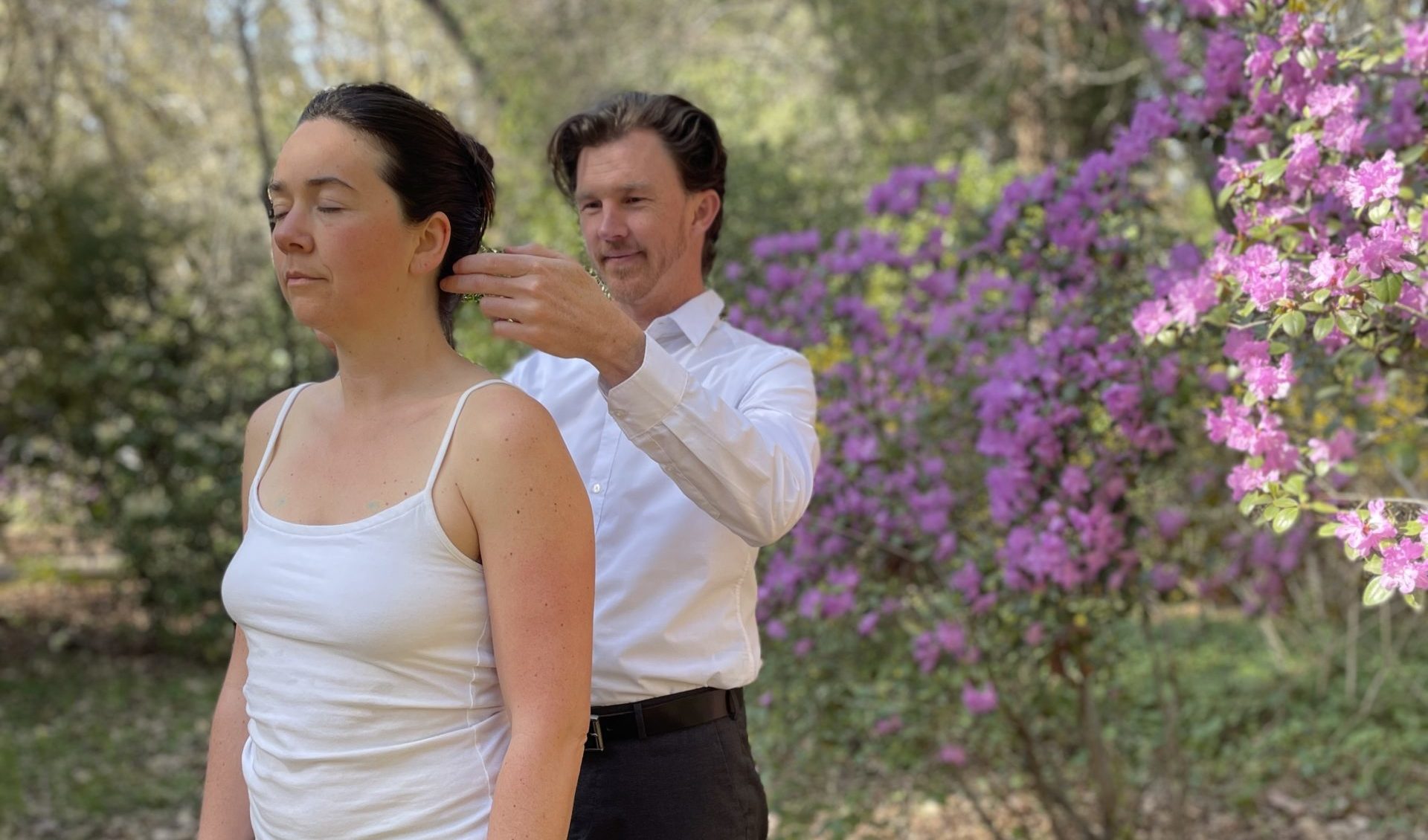
The last time someone adjusted your neck, you heard it before you felt it.
A fast twist. A crack that seemed to come from inside your skull. One second of pure panic while your whole body locked up. Maybe you felt better for a day. Maybe you felt worse. Either way, you made yourself a promise in the parking lot: never again.
Now your neck is stiff again. The headaches are back by three in the afternoon. You’re turning your entire torso to check your blind spot on I-5 because your head won’t rotate far enough. You know chiropractic helps people with exactly this. You just can’t make yourself lie down on that table again.
I meet people like you every week in Ashland. Some had one bad experience years ago. Some have osteoporosis, loose joints or a recent injury and are scared of making it worse. Some simply feel their body clench the moment anyone reaches for their neck. All of them were told, one way or another, that the pop is the price of getting better.
It isn’t. You can get excellent chiropractic care without a single pop, and for a lot of people, gentle care works better.
What That Pop Actually Is
The sound has a name: cavitation. When a joint is moved quickly to the end of its range, pressure in the joint fluid drops and a small gas bubble forms. That’s the noise. It isn’t a bone snapping back into place, and it isn’t what makes you feel better.
What helps is restoring motion to a joint that has stopped moving well, calming the muscles that have been guarding it, and giving your nervous system a reason to stop bracing. All of that can be done slowly, precisely and quietly. Research on neck and low back pain backs this up. Gentle mobilization and high-speed manipulation both help, and the difference between them is smaller than most people expect.
Why Force Backfires on a Guarded Body
When an area has hurt for a while, your body learns to guard it. The muscles around it stay tight, your movement shrinks and your system stays on alert for the next threat. A fast, forceful thrust can look like exactly that threat. A guarded body answers it by bracing harder, and the relief doesn’t last.
Gentle input works with that protective response instead of fighting it. When your body doesn’t feel threatened, the muscles let go, the joint moves, and you start to trust that motion again. That’s the heart of how I practice: help your body feel safe enough to change.
Meet Your Guide
I’m Dr. Noah Volz, a chiropractic physician in Ashland. I built my practice around gentle, light-touch chiropractic care for active adults whose pain keeps coming back, including people who swore they’d never see a chiropractor again.
Gentle doesn’t mean vague. Every visit starts with a thorough exam so I know exactly which joints are restricted, which muscles are guarding and how your nerves are doing. Then I choose the least forceful tool that gets the job done.
What Low-Force Care Looks Like in My Office
- Precise, low-force adjustments. Specific contact on the exact joint that needs it, with steady pressure instead of a fast thrust.
- Mobilization. I move the joint slowly through its range until it starts moving on its own again.
- Upper cervical care. Precise, gentle work at the top of the neck for neck pain, headaches and tension that sits at the base of the skull.
- Flexion-distraction. A table-assisted, low-force technique that gently opens and moves the low back.
- Soft-tissue work. Hands-on release for muscles that have been guarding for months.
- Kinesiotape and corrective exercise. Support and a few targeted movements so the change holds between visits.
I’m not against traditional adjustments, and I use them when your body is ready and you want one. But you will never be adjusted in a way you didn’t agree to. You can read more on my gentle chiropractic page.
Who This Is For
Gentle chiropractic is the right starting point if you get anxious about quick neck or back adjustments, have osteoporosis or low bone density, have hypermobile joints, flare easily after treatment, are recovering from an injury, or tried forceful adjustments before and felt worse. It’s also for anyone who simply prefers a calmer way to get better.
Your Plan in 3 Simple Steps
- Contact Dr. Volz. Send a short note through my contact page. Tell me what’s going on and what made you hesitant about chiropractic. I want to know.
- Get examined. I find exactly what’s restricted and what’s guarding, and explain it in plain language.
- Get better, gently. We start with low-force care and build from how your body responds.
You Don’t Have to Brace for Help
If the popping is what has kept you away, that problem is solved. Contact Dr. Volz and let’s get your neck and back moving again. I see people from Ashland, Medford, Talent, Phoenix and throughout the Rogue Valley.
Three Months From Now
Picture checking your blind spot without thinking about it. Waking up without the stiff neck. Getting through the afternoon without the headache. Walking into a treatment room relaxed, because you know nothing will be forced.
The other path is familiar. You keep putting it off because of one bad experience, the guarding settles in deeper, and the list of things you avoid quietly gets longer. One rough adjustment years ago shouldn’t decide how you feel for the next ten.
Common Questions
Does low-force chiropractic actually work?
Yes. Both gentle mobilization and manipulation have research support for neck and back pain. For people who guard, flare easily or fear treatment, gentle care is often the faster path because their body isn’t fighting it.
Will I feel anything?
You’ll feel steady pressure, gentle stretching and often a sense of release as the muscles let go. Most people stand up feeling looser and calmer.
Can I tell you not to adjust my neck?
Absolutely, and I’ll respect it every visit. I have plenty of gentle ways to treat the neck and upper back without quick movements.
When I’ll Send You Somewhere Else First
I screen every new patient for the rare signs that need emergency or medical care first. If you have any of these, go to the emergency room now:
- A sudden, severe headache unlike any you’ve had before
- Neck pain with slurred speech, double vision, facial droop or trouble swallowing
- New trouble controlling your bladder or bowels, or numbness in the groin or inner thighs
- Rapidly worsening weakness in an arm or leg
Keep Reading
Read about neck pain care in Ashland, or see everything I treat on my Conditions page.
Leave a Reply