
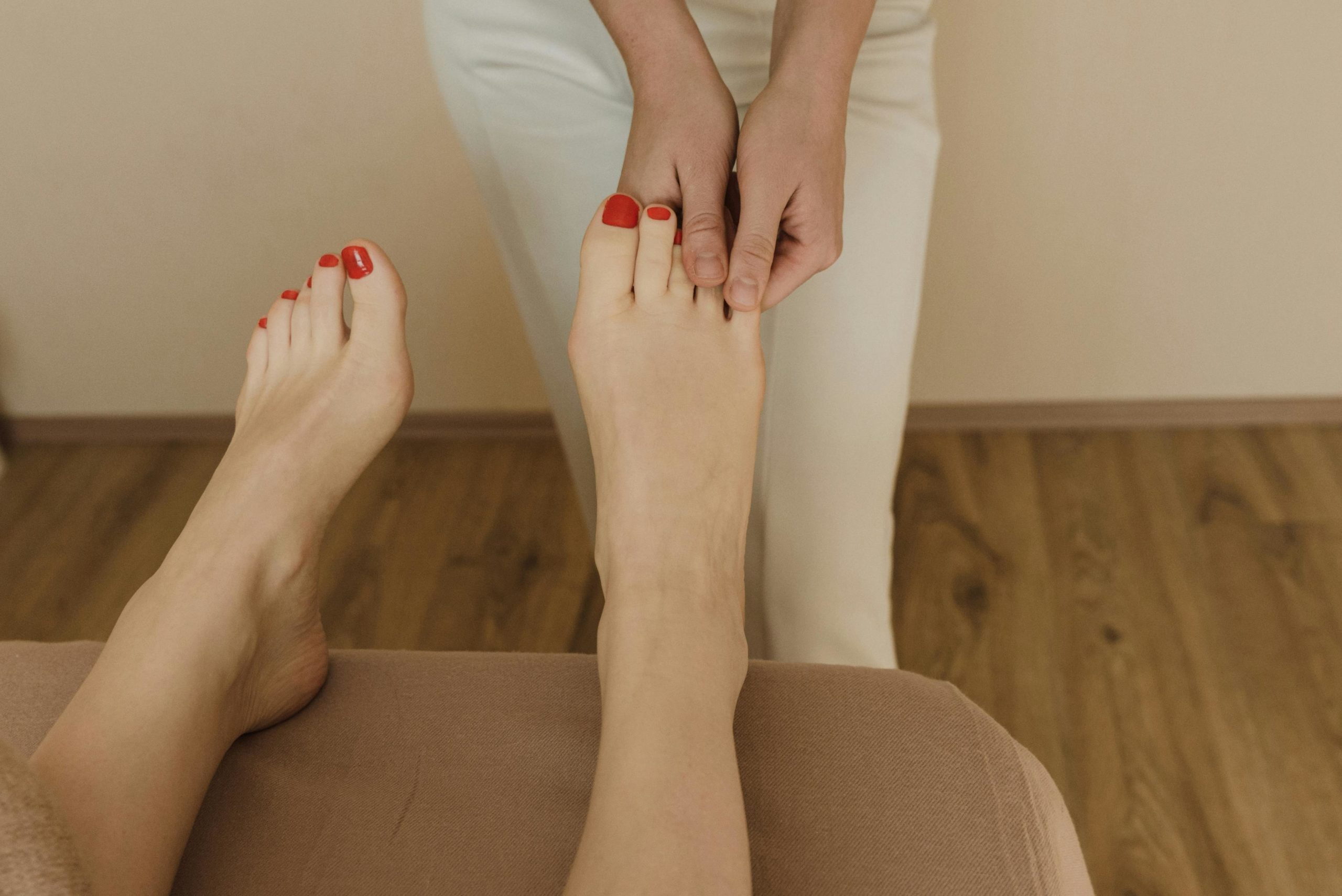
You’re three hours into a shift on your feet. Maybe it’s the dinner rush at a restaurant off the Plaza, maybe it’s a long day of rounds, maybe it’s a Saturday walking the Bear Creek Greenway with friends. And there it is again: a burning line along the inside of your arch, pins and needles under your heel, a strange numb patch on the sole of your foot that feels like you’re standing on a folded sock.
At first it only showed up late in the day. Now it wakes you at night, and even the sheet bothers it. You’ve tried new shoes, a massage ball and calf stretches. Someone told you it was plantar fasciitis, but the stretches didn’t touch it.
Underneath the frustration is a real fear. Is this nerve damage? Is it going to spread? Will you have to give up the hikes up toward Mt. Ashland, or the job that keeps you standing?
You shouldn’t have to keep guessing at a foot problem while it quietly takes over your days. Burning and tingling in the arch and heel point to a short list of causes, and one of the most overlooked is tarsal tunnel syndrome. When it’s found and treated well, it responds.
What Tarsal Tunnel Syndrome Actually Is
On the inside of your ankle, just behind the bony knob, there’s a narrow passage called the tarsal tunnel. The ankle bones form the floor, and a tough band of tissue called the flexor retinaculum forms the roof. Running through it are tendons, blood vessels and the tibial nerve, which supplies feeling to the sole of your foot and controls many of the small muscles that hold up your arch.
Just past the tunnel, the tibial nerve splits into branches that run under the arch and to the heel. When that nerve gets squeezed or stretched in or near the tunnel, it reacts the way nerves do: burning, tingling, electric zings and numbness on the bottom of the foot. That’s why tarsal tunnel syndrome feels so different from the stabbing first-step heel pain of plantar fasciitis, even though the two get confused all the time.
The squeeze has a few common sources: a foot that rolls in heavily with every step and tugs on the nerve thousands of times a day, scar tissue and stiff joints left behind by an old ankle sprain, or swelling, enlarged veins or a cyst crowding the tunnel. Long hours standing, running or hiking add load on top.
The ankle isn’t always the only place the nerve is under pressure. The same nerve fibers start in your low back. When a nerve root in the lower spine is irritated, the nerve becomes more sensitive all the way down, and a mild squeeze at the ankle starts producing real symptoms. That’s one reason foot treatment alone sometimes stalls. I check both.
Meet Your Guide
I’m Dr. Noah Volz, a chiropractor in Ashland. Oregon licenses chiropractors as chiropractic physicians, and foot, ankle and nerve pain are squarely within what I examine, diagnose and treat. You don’t need a referral to see me.
I see people who spent months stretching for plantar fasciitis when the problem was the nerve. My job is to find out exactly what’s irritated and why, then help your foot and the nerve that runs through it feel safe enough to change. My approach is gentle chiropractic care: less force, more precision.
What I Do When You Come In
The exam comes first, because burning foot pain has more than one cause.
- A detailed history: where the symptoms are, when they show up, how you sleep, old ankle injuries, your work and training, and what you’ve already tried.
- A hands-on foot and ankle exam: I tap and press along the tibial nerve, use positional tests that stretch the nerve, check the joints of the ankle and midfoot, and look for swelling or a mass in the tunnel.
- Nerve testing: sensation, reflexes and strength in both feet, so I know how the nerve is doing and whether something broader is going on.
- A gait and posture look: how your foot lands and rolls as you walk.
- A low back screen: because an irritated nerve root higher up changes everything about the plan.
- Further testing when the exam calls for it: if I suspect a cyst or other mass in the tunnel, or significant nerve damage, I order an MRI or ultrasound or refer you for nerve conduction testing, and I coordinate with a podiatrist or other specialist when you need one on your team.
Then we treat it. I use gentle adjustments and mobilization for the stiff ankle and midfoot joints, soft-tissue work, including instrument-assisted soft-tissue work (IASTM), along the calf and inner ankle to ease tension around the tunnel, and gentle nerve-gliding movements that help the tibial nerve slide freely again. Kinesiotape supports the arch while things calm down. Then we strengthen the muscles that hold your arch up, especially the small muscles of the foot and the tibialis posterior, and add balance work so your foot stops collapsing into the nerve with every step. If your low back is involved, we treat that too. You’ll also leave with clear guidance on footwear, long shifts and trail days.
If a nearby tendon problem, such as plantar fasciitis or posterior tibial tendon pain, is part of your picture and has stalled despite good rehab, shockwave is another option worth knowing about at Ashland Shockwave.
Your Plan in 3 Steps
- Contact Dr. Volz. Send a short note through my contact page and tell me what your foot is keeping you from doing.
- Get examined. A thorough exam of your foot, ankle, nerves and low back, further testing if you need it, and a clear diagnosis.
- Follow a plan that fits. Gentle hands-on care and a home program built around your work, your training and your week.
If you’re looking for a chiropractor in Ashland who takes burning foot pain seriously, contact Dr. Volz. I help people from Ashland, Talent, Phoenix, Medford and across the Rogue Valley get back on their feet.
Three Months From Now
Picture finishing a full shift and noticing your feet are just tired, the normal kind of tired. Sleeping with the covers on. Walking the loop through Lithia Park without counting the minutes until the burning starts.
Now picture the other path. You keep buying new insoles and hoping. The numb patch spreads a little. You stand less, walk less and skip the hikes, and a year from now your world has quietly gotten smaller. A nerve compressed for a long time is harder to settle and can be left with lasting numbness or weakness.
Common Questions
How do I know if it’s tarsal tunnel or plantar fasciitis?
Plantar fasciitis usually feels like a sharp, bruised pain at the bottom of the heel that’s worst with your first steps in the morning. Tarsal tunnel tends to burn, tingle or go numb along the arch and sole, and it often gets worse the longer you’re on your feet or at night. Some people have both. The exam sorts it out.
Do I need surgery?
Most people start with conservative care, and that’s where I start too. If the exam shows a cyst or other mass pressing on the nerve, or the nerve isn’t responding the way it should, I refer you to a foot and ankle specialist and keep coordinating your care.
Can I keep running or hiking?
Usually, with changes. I’ll tell you how much, how far and on what terrain while the nerve calms down, and we’ll build back from there.
When I’ll Send You Somewhere Else First
I screen every new patient for these. If you have one, I’ll tell you right away and help you get to the right doctor.
- A foot that turns cold, pale or blue, or a painful, swollen calf
- A hot, red, swollen foot or ankle, especially with fever
- A possible fracture after a fall, twist or impact
- Rapidly worsening weakness, such as your foot starting to drag or slap
- New bladder or bowel control problems, or numbness in the groin or inner thighs, with back or leg symptoms
Keep Reading
Learn about my gentle chiropractic care, see how I treat low back pain in Ashland, or browse everything I treat on my Conditions page.
One response to “Tarsal Tunnel Syndrome Treatment in Ashland, OR”
[…] about tarsal tunnel syndrome treatment in Ashland, learn about my gentle chiropractic care, or browse everything I treat on my Conditions […]