

Flexion Distraction
A gentle, rhythmic spinal decompression technique for disc-related pain, sciatica, and restricted movement.
How flexion distraction works
Flexion distraction uses a specialized treatment table that applies a slow, rhythmic traction and bending motion to the spine. Rather than a thrust or high-velocity adjustment, the motion is gentle and progressive — designed to decompress disc material, open joint spaces, and reduce pressure on spinal nerves.
It is particularly effective for patients with disc herniations, sciatica, spinal stenosis, or radiating leg pain — conditions where reducing pressure and restoring movement through the discs produces meaningful relief.
When flexion distraction fits best
Disc herniation or bulge
The rhythmic traction helps move disc material away from the nerve, reducing the pressure that causes pain, tingling, and weakness without any forceful loading of the spine. It is gentle and effective.
Sciatica and radiating leg pain
When nerve compression is sending pain, tingling, or numbness into the leg or foot, decompressing the disc and the affected spinal level often produces relief that builds progressively across sessions.
Spinal stenosis
When the spinal canal is narrowed or joints are stiff and compressed, the gentle opening motion of flexion distraction can restore movement and reduce the cumulative load on irritated structures.
What a session involves
Specialized table movement
The treatment table moves in a controlled, rhythmic pattern while you lie face down. The motion is slow and gentle — most patients find it more comfortable than they expect.
Targeted spinal levels
The technique is applied to specific vertebral segments based on your exam findings — so the decompression is directed at the levels that are actually relevant to your symptoms.
Progressive series
Relief typically builds across multiple sessions as the disc and surrounding tissue respond to repeated decompression. Most patients notice meaningful change within the first few visits.
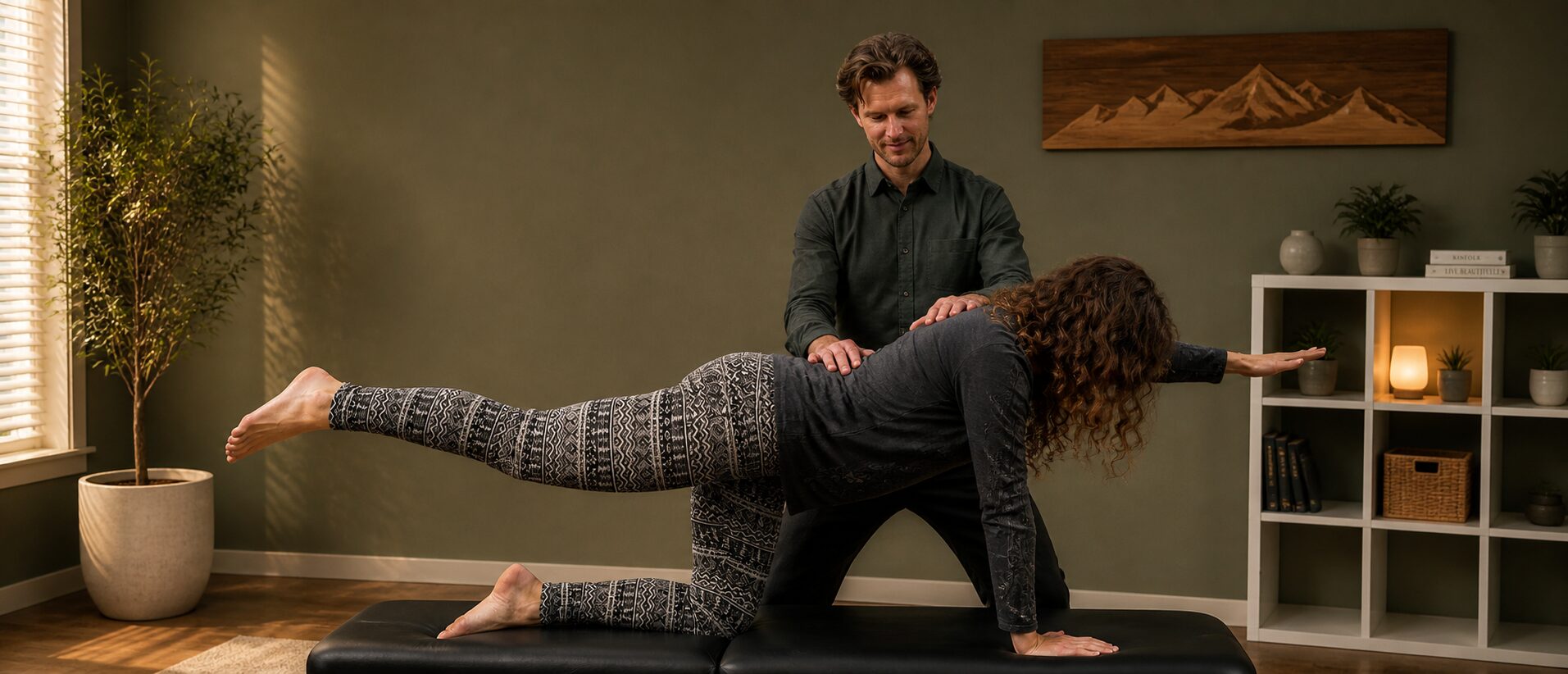
What patients typically experience
- Reduced radiating leg or foot pain
- Improved spinal range of motion and ease of movement
- Relief that builds progressively across sessions
- Effective treatment for those who cannot tolerate forceful adjustment
Find out if flexion distraction is right for your case
We will evaluate your disc and nerve involvement, identify the specific levels contributing to your symptoms, and determine whether flexion distraction fits your presentation before starting any care.